The synthetic turf industry has reached a notable milestone with the widespread adoption of the first federally certified biobased sports surface system. AstroTurf, the company credited with inventing synthetic turf nearly six decades ago, now holds the distinction of producing the only athletic surface to earn the U.S. Department of Agriculture's Certified Biobased Product designation. The RootZone GT-B system delivers measurable environmental benefits while maintaining the performance standards expected at elite athletic facilities across the country.
With more than 2 million square feet of RootZone GT-B surfaces installed over the past year, the system has moved beyond proof-of-concept into large-scale deployment. Major Division I athletic programs, municipal sports complexes, and high-use tournament facilities have adopted the certified surface, signaling a broader shift in how facility managers approach purchasing decisions for athletic infrastructure.
Understanding the Federal Certification Standard
The USDA BioPreferred Program, established through the 2002 Farm Bill and reauthorized in 2018, provides third-party verification of biobased content in consumer and commercial products. Products earning the certification must demonstrate that a significant portion of their composition derives from renewable sources such as plant, animal, marine, or forestry materials. The program requires federal agencies and their contractors to give purchasing preference to certified products when specifications permit.
According to Rob Mitchell, Vice President of Business Development at the company, achieving certification required substantial reformulation of existing products. The resulting system incorporates 11 percent renewable and biobased materials without compromising the performance characteristics that athletic directors and facility managers expect. This percentage may appear modest, but the certification process demands rigorous documentation and testing to verify claims.
Vernell Thompson, who oversees the USDA BioPreferred Program, stated that certification helps consumers and federal buyers identify products that contribute to reduced petroleum dependency. The program aims to combat greenwashing by providing independent verification of environmental claims.
Quantifying Environmental Outcomes
The environmental impact data released alongside recent installation figures offer concrete metrics rather than abstract sustainability claims. Fields installed over the past year collectively represent energy savings equivalent to fourteen million phone charges. The carbon capture potential equals the annual sequestration capacity of 180 acres of trees, or the same benefit as 3,000 seedlings grown over a decade.
Vehicle emission offsets from GT-B installations exceed 500,000 miles of driving, while energy conservation figures translate to more than 20,000 gallons of emissions-related energy use avoided. These calculations derive from lifecycle assessments comparing biobased components against their petroleum-based alternatives.
The metrics matter because they provide facility managers and purchasing committees with tangible data points for budget justifications. Public institutions increasingly face requirements to demonstrate environmental stewardship in procurement decisions. A USDA-certified product simplifies compliance documentation while delivering quantifiable outcomes.
Technical Foundation of the System
The GT-B system builds upon RootZone technology that distinguishes AstroTurf synthetic turf products from competing systems. The technology employs a texturized fiber layer that encapsulates infill material, creating a matrix that mimics the root structure of natural grass. This design addresses several persistent challenges in synthetic surface performance.
Infill migration presents one of the most significant maintenance issues for synthetic fields. During intensive play, rubber or organic infill granules shift from high-traffic areas toward the sidelines or end zones, creating inconsistent playing conditions. The RootZone matrix holds infill in place, maintaining uniform shock absorption and traction across the entire playing surface throughout the product's lifespan.
Independent research conducted at Michigan State University examined the biomechanical properties of various synthetic turf systems. The study found that RootZone technology reduces torque transmitted to lower extremities compared to basic infilled systems. This reduced torque translates to more natural foot release during athletic movements, addressing concerns that have historically accompanied synthetic surface adoption.
The GT-B variant adds Trionic Plus fiber technology, which combines co-polymers of nylon and polyethylene. This hybrid fiber composition delivers the durability of nylon with the softer feel that athletes prefer. Additional treatments, including antimicrobial protection and infrared-reflective coatings, further differentiate the system from standard synthetic alternatives.
Adoption Across Athletic Programs
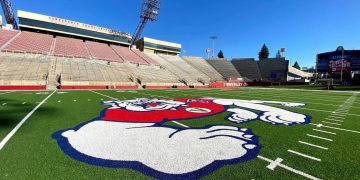
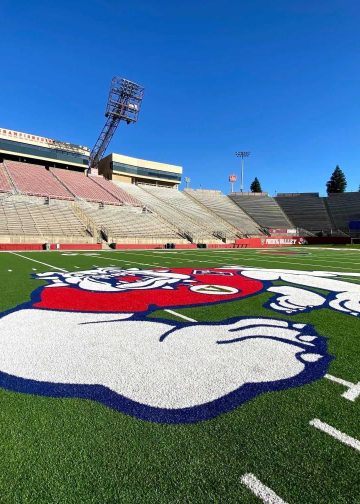
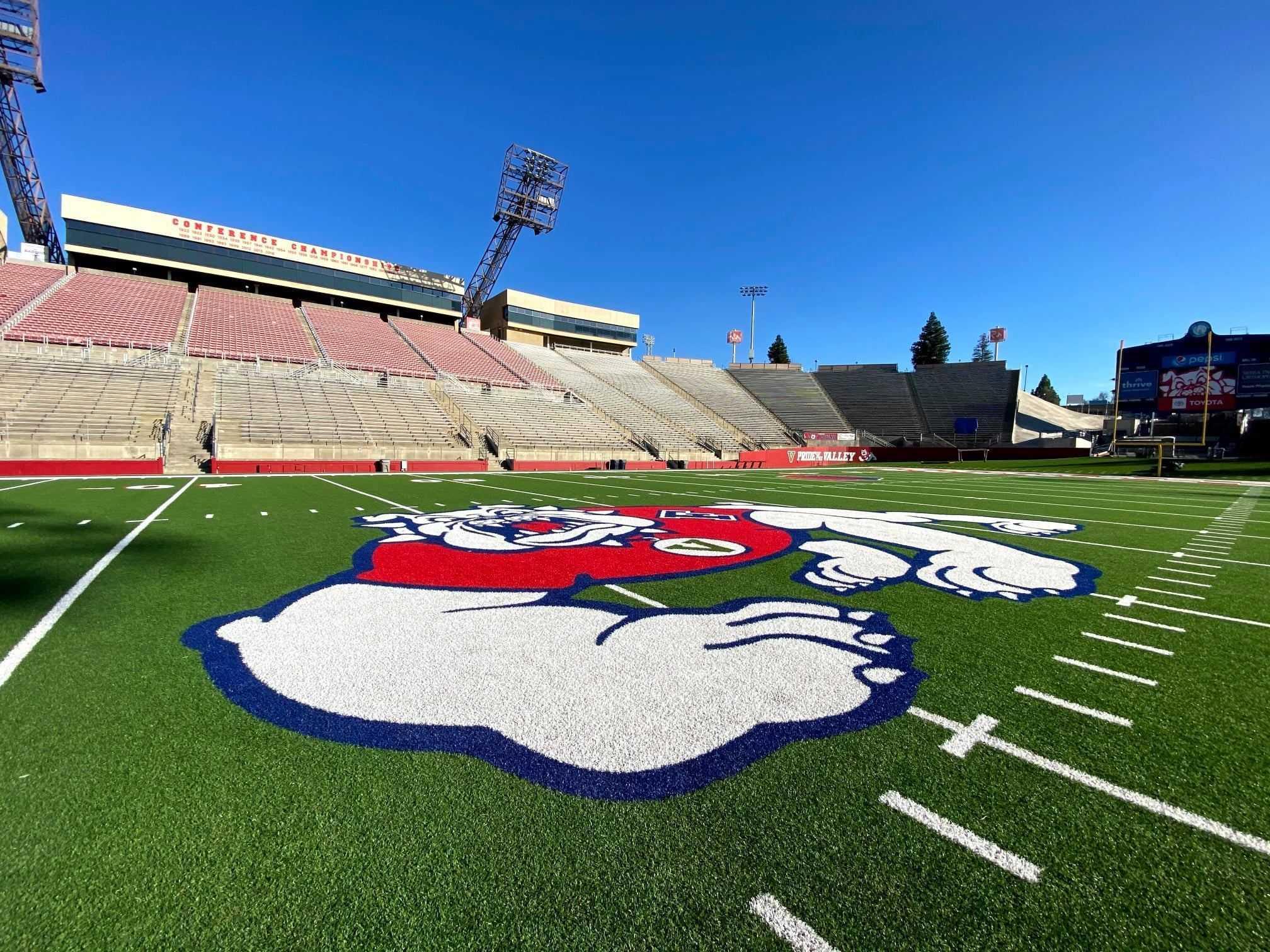
Fresno State University represents one of several Division I programs that have selected the certified biobased surface for their facilities. The institution's relationship with AstroTurf extends back to 2019, and the ongoing partnership reflects satisfaction with product performance and corporate responsiveness.
According to athletic director Garrett Klassy, the decision to adopt advanced turf technology followed careful evaluation of available options. The new surface at Valley Children's Stadium features the Pro Woven Series 3DM60 with RootZone Technology, making Fresno State the only NCAA Division I school playing on this particular system configuration.
Oregon Episcopal School in Portland achieved another notable first by combining the USDA BioPreferred turf with a Rekortan track surface at a single facility. The project marks the first installation in the Pacific Northwest to feature the GT-B system and the first nationwide to integrate two USDA-certified surfaces in one location.
North Salinas High School in California offers another example of GT-B adoption at the secondary school level. Dominick Berarducci, Vice President of Sales for the Northwest region, described the installation as part of a broader movement toward smarter infrastructure decisions at educational institutions.
Manufacturing and Quality Standards
Production of GT-B systems occurs at vertically integrated facilities where AstroTurf controls every phase from initial masterbatch formulation through finished field installation. This approach ensures consistency in material composition and allows for immediate correction when quality metrics fall outside acceptable ranges.
Testing protocols exceed industry norms, with products evaluated using Berlin Athletes machines, QUV weathering equipment, and accelerated wear simulators. Third-party laboratory analysis confirms that raw materials and finished goods contain no detectable PFAS compounds, addressing concerns that have prompted scrutiny of synthetic products across multiple industries.
The company has partnered with the University of Tennessee's Center for Athletic Field Safety for research spanning more than twelve years. This academic collaboration provides independent validation of performance and safety claims, separating verified outcomes from marketing assertions.
Sport Group, the parent company headquartered in Germany, maintains manufacturing operations across nine facilities serving markets in the Americas, Europe, the Middle East, Africa, and the Asia-Pacific regions. The broader organization employs approximately 2,400 workers and has achieved an ESG rating of 11.2, classified as low or negligible across all evaluated categories by Sustainalytics, a global provider of environmental, social, and governance research.
Market Context and Industry Position
The synthetic turf market includes numerous competitors offering products with varying performance characteristics and environmental profiles. What separates certified biobased systems from alternatives is the documentation standard required for USDA designation. Manufacturers cannot simply claim renewable content without undergoing third-party verification and ongoing compliance monitoring.
According to industry data, the biobased products sector supports 4.6 million American jobs and contributes substantially to rural economic development. Each biobased job generates an additional 2.79 positions in related sectors. Annual petroleum displacement from biobased products reaches approximately 9.4 million barrels, with greenhouse gas reduction potential estimated at 12.7 million metric tons of carbon dioxide equivalents.
AstroTurf's position as the sole manufacturer offering USDA-certified sports turf creates a distinct procurement pathway for institutions prioritizing verified environmental credentials. The company also holds membership in the Green Sports Alliance and was among the first in its sector to eliminate PFAS from production processes.
Infrastructure Implications
Athletic surface decisions carry long-term implications for facility budgets and operational planning. Synthetic systems typically deliver 3,000 or more hours of annual use compared to 200-300 hours for natural grass before renovation requirements emerge. This utilization advantage allows institutions to expand programming, generate rental revenue, and support broader community access.
Water conservation represents another significant consideration, particularly in regions facing drought conditions. UCLA's experience with biobased AstroTurf surfaces demonstrated water savings that qualified for substantial utility rebates from the Los Angeles Department of Water and Power.
Maintenance requirements differ substantially between synthetic and natural surfaces. Eliminated needs include fertilization, reseeding, mowing, and irrigation, with cost savings accumulating over the product lifecycle. Facilities that previously closed fields for turf maintenance and recovery periods can now offer year-round access.
The environmental case for synthetic surfaces continues to strengthen as manufacturers incorporate renewable materials and recycling programs mature. Sport Group operates what it describes as the industry's first turf recycling facility capable of processing EPDM rubber, establishing end-of-life pathways that further reduce lifecycle environmental impact.
For institutions evaluating athletic surface investments, the USDA BioPreferred certification offers a straightforward verification mechanism for sustainability claims. The RootZone GT-B system demonstrates that performance standards and environmental responsibility can advance together rather than requiring compromise between competing priorities.