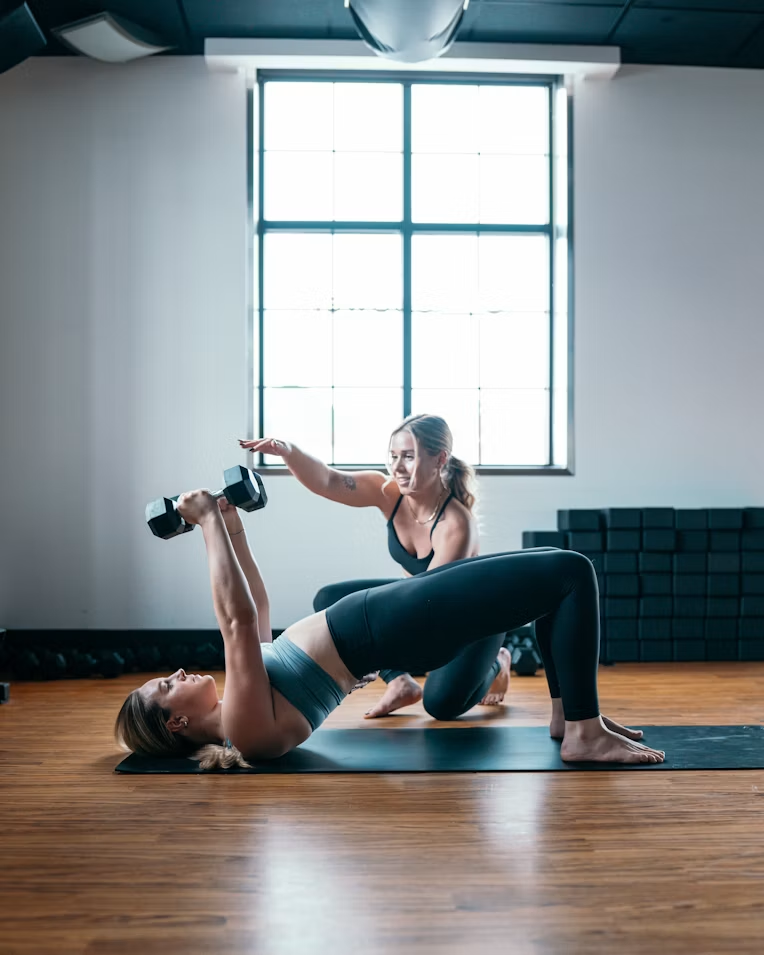
When it comes to working out one’s glutes, two hip thrust vs glute bridge exercises tend to be the most often recommended – and the ones most likely to occur in any given ab workout, lower-body workout, or glute-focused routine. Both require being on one’s back or lower back and lifting one’s hips to extend one’s legs and work the glutes. Are these two variations in any way different?
While the goal of both is to activate the glutes by hip extension, the two moves are performed differently, and it is important to understand these variations to determine which is more efficient and suitable for one’s purposes, as both share certain benefits, but they also have different pros and cons.
What Is a Glute Bridge?
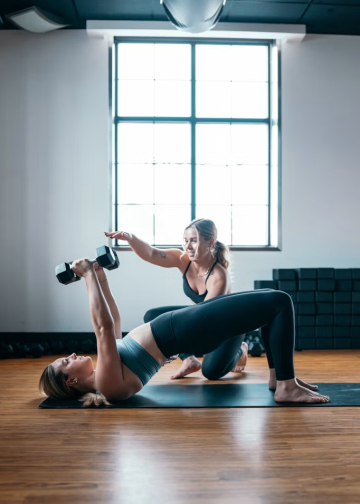
A glute bridge is a simple lower-body exercise, performed while lying on one’s upper back
and resting one’s shoulders against the surface below. The simplest move of this type is performed by bending one’s knees and positioning one’s feet so the soles are flush against the ground. Tightening the muscles, one pushes the hips upward and lifts them as far as it is comfortable.
The move generally targets all of the glutes, hamstrings, and lower back, and it can be modified to increase its difficulty. The glute bridge is performed either with additional weights or without.
What Is a Hip Thrust?
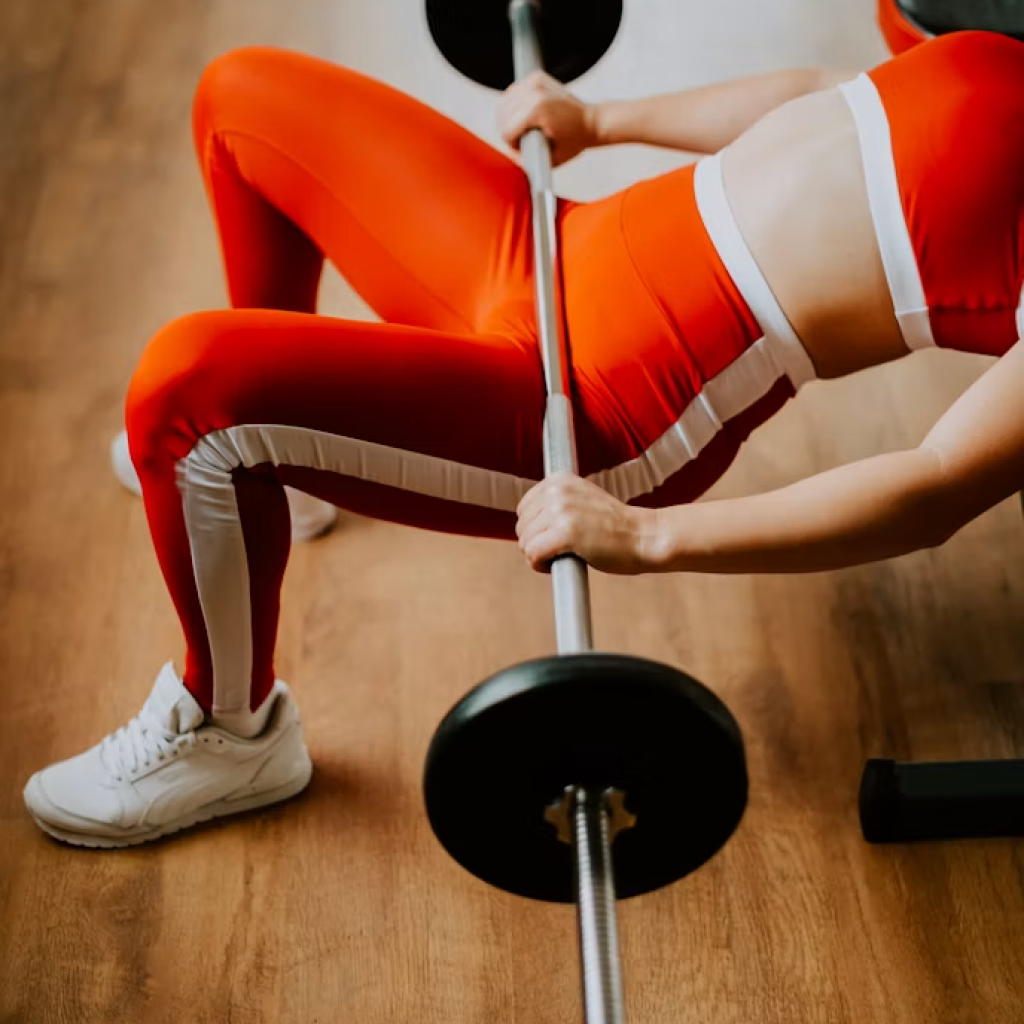
A hip thrust is very similar to the glute bridge, though one performs it while sitting against a bench.
The hip thrust places one’s upper back against a bench or any other object that can bear one’s weight. Additionally, the hip thrust can be performed with a weight or resistance placed on one’s hips. One can also use a single-leg hip thrust, a more challenging variation of the exercise.
Compared to the glute bridge, which is a body-weight exercise unless one adds weights to it, the hip thrust is performed either with additional resistance or with one’s body weight as one’s back is supported by the bench against which one must thrust one’s hips.
Hip Thrust vs Glute Bridge: What Are the Differences?
The simplest way of comparing the two is to look at the characteristics of the two and examine the differences directly. The table below compares the hip thrust and glute bridge exercises.
Feature |
Glute Bridge |
Hip Thrust |
| Upper-body position | Back on the floor | Upper back on a bench |
| Range of motion | Shorter | Greater |
| Typical resistance | Body weight or light weights | Often barbell or heavier weights |
| Difficulty | Beginner-friendly | Intermediate to advanced |
| Equipment | Usually none | Bench and optional weights |
| Best suited for | Activation, beginners, home workouts | Strength and muscle growth |
One of the most notable differences between the two has to do with the use of additional weights and resistance. The glute bridge is a body-weight exercise, although one can add a dumbbell or a resistance band to it. Meanwhile, the hip thrust can be performed with dumbbells or a barbell or one uses a barbell and special hip thrust benches as a part of it. In either case, one can add weights to both glute bridges and hip thrusts, although the latter is much more effective.
What Muscles Do They Work?
Both glute thrusts and glute bridges activate one’s three major muscles – gluteus maximus, gluteus medius, and gluteus minimus. The glutes, when contracted, rotate one’s thigh and extend one’s hips.
Additionally, both of these thrust movements work the hamstrings, back, and core. The glute bridge can also work the hip flexors, while the hip extensions that one performs while doing hip thrusts also engage one’s quadriceps. Neither of these two moves isolates one muscle exclusively – instead. both target the glutes heavily and work some of the other muscles at the same time.
Glute Bridge Benefits
The benefits of the glute bridge include:
1. Great for beginners
Since the bridge is generally not performed on a bench or one’s upper back is on ground, one does not need any additional equipment.
2. Helps improve glute activation
As the glute bridge is quite a simple exercise, it allows one to become more in tuned with the sensation that one’s glutes undergo during the activity, thus enhancing the activation of the targeted muscle.
3. Perfect for beginners and those without equipment
Anyone who wants to do the glute bridge does not have to spend money or acquire special equipment.
4. Easy to modify
Glute bridges may be substituted with hip extensions but these variations are relatively challenging. One may also add a dumbbell to the glute bridge to turn it into a hip thrust exercise. The hip thrusts can be performed by using a single-leg stance, a lighter dumbbell, or something else.
Hip Thrusts Benefits
The benefits of the hip thrusts include:
1. Excellent for building glute strength
While both hip thrusts and glute bridges can be used to increase one’s glute size, in terms of the weight or resistance one uses, the former generally allows one to add more weight.
2. Greater range of motion
Compared to the glute bridge, which is performed on one’s upper back and shoulders on the surface, the hip thrust allows for a bigger motion.
3. Useful for muscle growth
By virtue of the ability to add more weight or resistance, the hip thrust is a bigger help since one can progress with the load for each exercise.
4. Supports athletic performance
The range of motion, together with one’s hip extension, allows one to gain more strength and muscle power, which, in turn, can benefit one in sports.
Which Is Better: Hip Thrust or Glute Bridge?
There is no simple answer to this question. For some people and in some contexts, glute bridges are better, whereas, in others, hip thrusts are better. The two exercises have different pros and cons, and one should be aware of them before starting to incorporate them into the fitness regimen. Both of these thrust moves are compound exercises, and one should be able to perform a couple of them with correct form.
As for the glute bridges, since they are simple, and easy enough to be used for simple lower body workouts, they are excellent additions to one’s ab workouts or lower body workouts. Those who have mastered the basic version of the glute bridge can progress to the variations. The hip thrusts are generally better for those who want to develop both their lower body strength and their glute size.
Common Mistakes to Avoid
Regardless of whether one chooses glute bridges or hip thrust exercises, it is important to note that both can be performed incorrectly.
Incorrect execution makes both the glute bridge and the hip thrust counterproductive, as far as strengthening one’s glutes and lower back is concerned. When performing either of these thrust exercises, one must avoid trying to achieve the maximal range of motion by extending one’s back as far as one can.
Instead, one should keep one’s core engaged while one performs a hip thrust or a glute bridge. During these two moves, one should feel one’s glutes contracting, rather than concentrating on thrusting one’s hips up and back. When performing the hip thrust move, even when using just one’s body weight at first, one should make sure that the bench on which one is resting one’s upper back, is steady and strong.
The Bottom Line
The simple comparison of glute bridges and hip thrusts show that both exercises have unique benefits and drawbacks. The two are generally used in the same area of sports training – those who wish to develop their glutes, and their glute, hip and lower back strength, and those who wish to increase and strengthen their glutes, can use either of these exercises. Which is better depends on one’s individual goals.
The hip thrusts allow a wider range of motion and one can add resistance to increase the intensity of the thrusts. Hence, they are best for those who wish to increase their glute volume.
Meanwhile, the glute bridge is perfect for those who want to develop the neural activation of the glutes and learn to engage them at will. For those who want to build their glute strength, either move would suffice, but the glute bridges could prove more beneficial as the glutes are targeted more directly. However, the choice between a hip thrust and a glute bridge is ultimately up to the individual.