If you've been in a gym on “Leg Day,” you've had a debate internally: “Leg Press or Hack Squat; which is the better machine?”
Bodybuilders, athletes, and first-timers use these machines, but both the leg press and hack squat offer different experiences of training the lower body. Some abled lace up the hack squat for the quad burn, and some have an ‘eh' experience on the leg press, but since you can set up the hack squat for a safe heavy lift, you may lean toward that…. but, ultimately, which of these machines makes you stronger or builds aesthetic muscle, leg press, squat, or hack squat?
Understanding the Leg Press
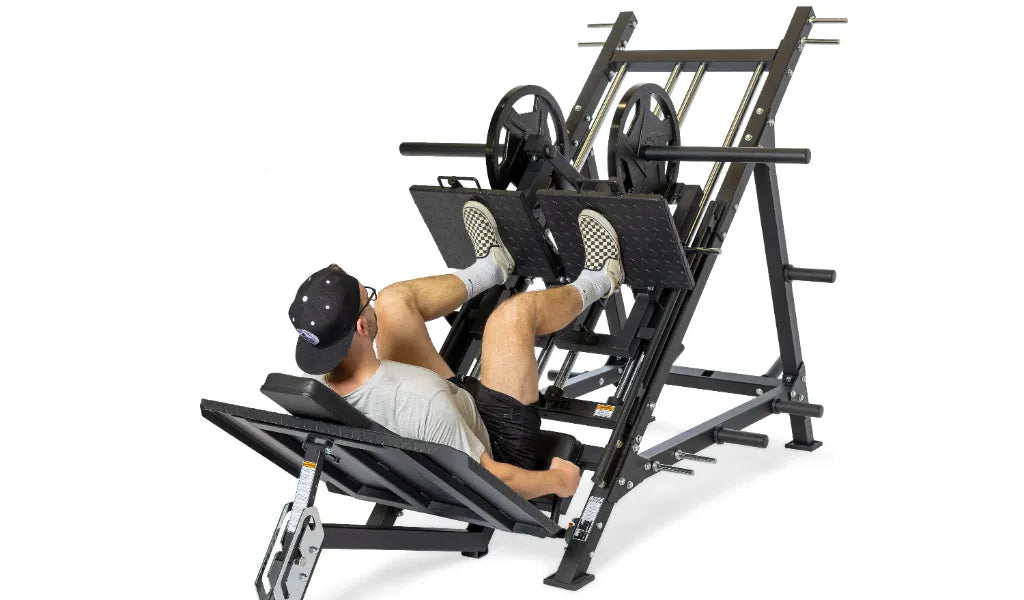
The leg press is often the first machine that beginners feel comfortable with on leg day. You sit back in a supportive seat, place your feet on a large metal platform, and push the platform away using your legs. That setup alone makes people feel stable and secure, especially those new to lower-body strength training. But don’t be fooled—when used correctly, the leg press can be just as effective for hypertrophy and strength gains as barbell squats.
How the Leg Press Works
The leg press provides isolation of your lower body by limiting the involvement of your stabilizing muscles, allowing you to focus solely on developing leg power without the need to worry about balance. Since the sled moves on a rail, your path of movement becomes predictable and is controlled. The only real variable is foot placement. If you move your feet higher, lower, wider, or closer together, you would be targeting different muscle groups.
Benefits of the Leg Press
The leg press offers many advantages in terms of accessibility. From the beginner to the person in rehabilitation, to the lifter who wants to lift heavy weights without putting strain on his spine, the leg press is well utilized. You can develop considerable quad and glute strength without worrying that your upper body stability is failing your movement. The leg press is also ideal for progressive overload, or adding a measured amount of weight, because it’s linear and easy to track.
Drawbacks of the Leg Press
The main disadvantage is the absence of functional carryover. Unlike real-life movements, the leg press requires no balance, coordination, or core activation. You can gain strength from the leg press, but the strength gained does not directly transfer to squatting, jumping, or any athletic performance. Also, it is easy to lose track of the load; users often fail to see how it takes a toll on the knees or hips when performing the exercise incorrectly.
The Hack Squat
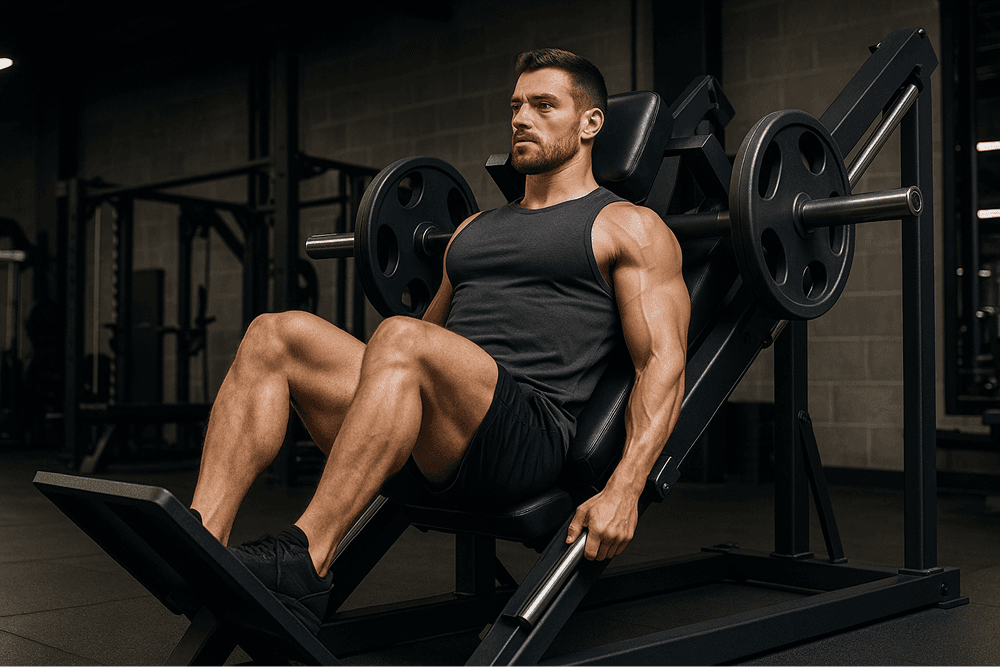
If you like the idea of a machine that mimics the squat and even has a greater degree of stability than the squat, then the hack squat might be your best friend and at times your worst enemy. Lifters have been known to say, and I agree, that the hack squat is the machine that calls your quad weakness out on the spot. While you perform a hack squat, your upper back is supported by a padded platform, and your shoulders are supported by a shoulder pad. You push the sled up by extending your legs; it feels like a squat, but remember the body does not decide to change the range of motion.
How the Hack Squat Works
The hack squat is effective because of the body's angle, which increases the load on the quads while still allowing some work for the glutes and hamstrings. It simulates the squat motion nicely, and with the hack squat, you don’t have to worry about balance or core stability, which allows you to increase the load even as an intermediate lifter while still maintaining controlled movement.
Benefits of the Hack Squat
There are very few machines that are more effective for training the quadricep muscles than the hack squat. It provides an opportunity to train the legs through a full range of motion, thereby recruiting more motor units and increasing the potential for muscle hypertrophy. This occurs because of the fixed platform that you lean against, and consequently, your technique/form can be maintained even when the squat is executed to a full depth. This is particularly valuable when training a lower body lift for hypertrophy, it will also build muscular strength!
Drawbacks of the Hack Squat
The intensity of the hack squat can be daunting. It places increased load on the knees and may cause discomfort for individuals with joint problems. Depending on limb length and mobility, the fixed movement path may feel uncalibrated to some lifters. Although it does work the legs like the leg press, it does not allow someone to push extremely heavy weights without reaching a cardiovascular limit. It is a brutal machine that asks for mental toughness.
Best Workouts for Full Body With Dumbbells
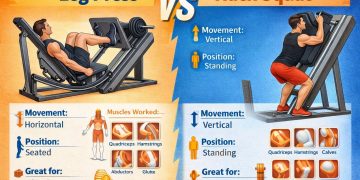
Leg Press vs Hack Squat: Key Differences
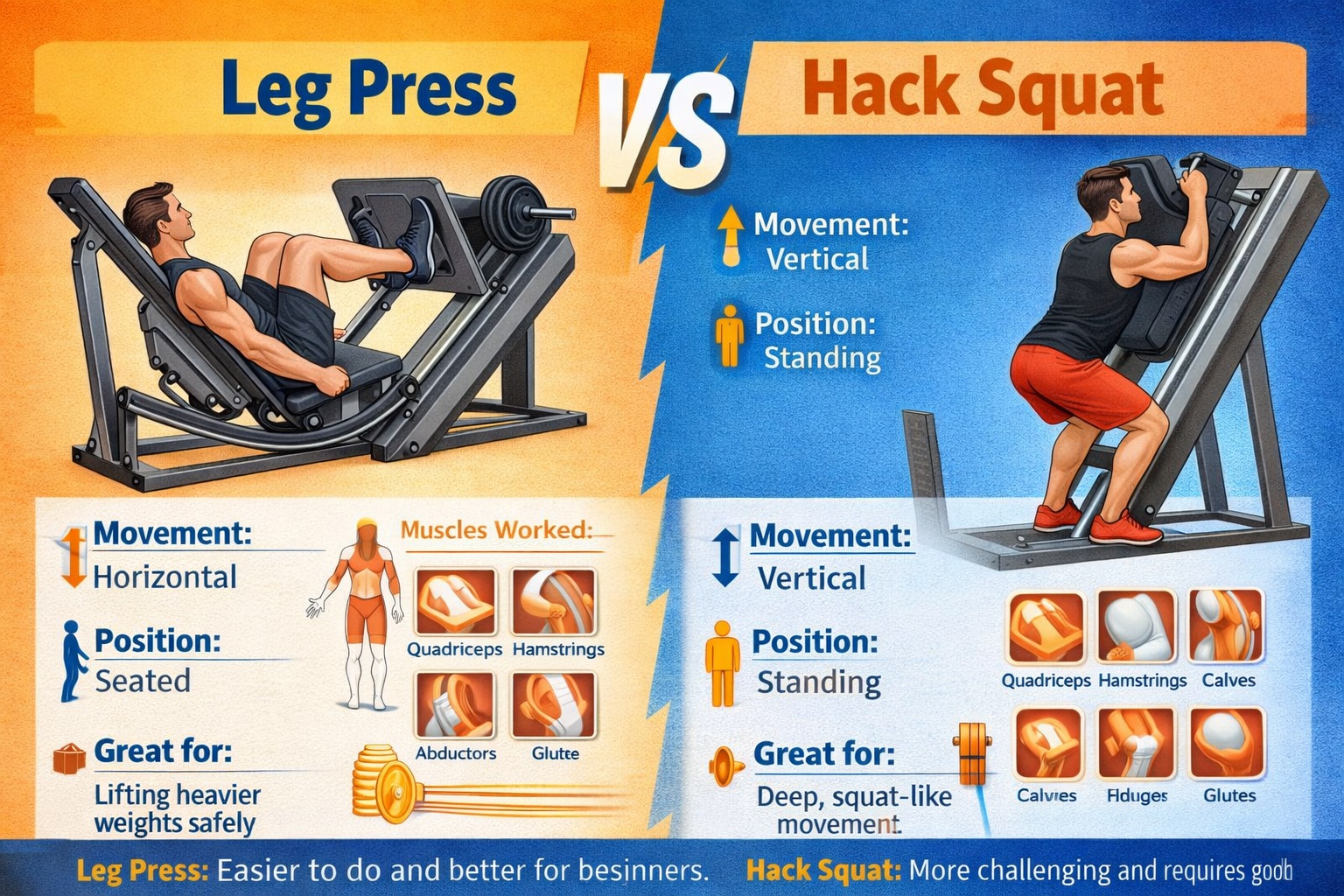
The table below helps you draw a quick comparison between the leg press and the hack squat.
Comparison Table: Leg Press vs Hack Squat
| Feature | Leg Press | Hack Squat |
| Primary Target Muscles | Quads, glutes, hamstrings (varies by foot placement) | Mainly quads, with glutes and hamstrings assisting |
| Experience Level | Beginner-friendly | Intermediate to advanced |
| Range of Motion | Moderate to deep, depends on foot placement | Deep, fixed, and consistent |
| Functional Transfer to Real Movements | Low | Moderate |
| Spine Load | Minimal | Moderate (loaded but supported) |
| Stability Required | Very low | Low to moderate |
| Strength Potential | Very high (easy to lift heavy safely) | High (more demanding on lungs and quads) |
| Risk Level | Low to moderate | Moderate |
| Best For | Heavy hypertrophy with joint support | Quad-dominant strength and growth |
Muscles Worked: Leg Press vs Hack Squat in Detail
Leg Press Muscle Activation
Depending on the position and angle of your feet on the pressing platform, the leg press can work various muscle groups in your lower body. A higher foot position is going to recruit more glute and hamstring activation, whereas a lower foot position will result in more quadriceps activation. Furthermore, a wider foot placement will work the inner thigh and hip muscles. The versatility of the leg press is the reason for its popularity as a leg day exercise.
Hack Squat Muscle Activation
The hack squat’s main focus is on your quads, especially the vastus lateralis or outer quad. The movement from your knees to travel forward makes your quadriceps work overtime than what a typical leg press could do. However, when you descend deeply, the hack squat also challenges the ability of your glute muscles.
The hack squat almost always prioritizes quads, especially the vastus lateralis (the outer quad). Because the movement forces your knees to travel forward, your quadriceps work harder than they would on a typical leg press. The hack squat also challenges your glutes, especially when you descend deeply.
Mikasa Workout And Diet: Day-Wise Breakdown
Which Machine Is Better for Building Muscle?
If your goal is simply hypertrophy, either machine will serve you well. However, we would recommend the hack squat because it helps you get into a deeper range of motion under much more time under tension for your quads; thus, you will completely fatigue your quads, and it holds perfect form on a fixed trajectory regardless of fatigue.
The leg press can also tolerate plenty of very heavy training volume, and if your body responds well to high-rep burnout sets or heavy drop sets, the leg press becomes especially valuable for hypertrophy. Many bodybuilders will combine both machines to maximize stimulus.
Which Machine Is Better for Strength?
When you’re looking to transfer the time in the gym on a machine to actual strength in tangible form, you squat, jump, or put time in athletics. As such, the hack squat is the better choice. It allows more muscle development through a natural movement pattern. The leg press builds strength, too, but it doesn’t translate as effectively into functional movements.
Which Machine Is Safer?
Generally, the leg press is thought to be safe for individuals, in particular novices to resistance training or individuals recovering from injury. Your back is supported, you control the range of motion, it is difficult to fall, and it is also difficult to fail in a dangerous way in the leg press.
The hack squat is also safe, though it adds slightly more stress on the knees, and for someone with limited mobility, it may feel like more effort.
Goku Workout Routine: Train Like Kakarot in Real Life
Which Machine Should You Choose?
The answer to the leg press vs hack squat debate depends entirely on your goals:
Choose the Leg Press If:
- You are new to squatting or are hesitant about free-weight squats
- You would like to stress your legs without putting your back at risk
- You would like to do joint-friendly hypertrophy work
- You are an injury recovery client or have poor balance
Choose the Hack Squat If:
- You want explosive quad gains
- You want strength that applies to actual athletic movement
- You want to do high-intensity leg training
- You’re comfortable training in a deep range of motion
Final Verdict: Leg Press vs Hack Squat—Which Is Better?
There is no inherent “better” option for either machine; they are equally valuable in their own respects. The leg press is the safest, the most versatile, and the easiest to use for basically anyone. The Hack Squat machine is the “better” option for quad strength, depth of range of motion, and developing strong functional strength. If you are looking for a “full leg day” experience, then it is pretty clear that you should simply use both. Start with the Hack Squat machine fresh, focusing on your quads, and end your leg workout on the leg press, finishing up with high-volume burnouts.
When put together, the leg press and the hack squat are going to make your legs explode – the leg press machine has exposure to every leg exercise. You can ditch your preferences in favor of both the leg press and the hack squat for the ultimate essential lifts.